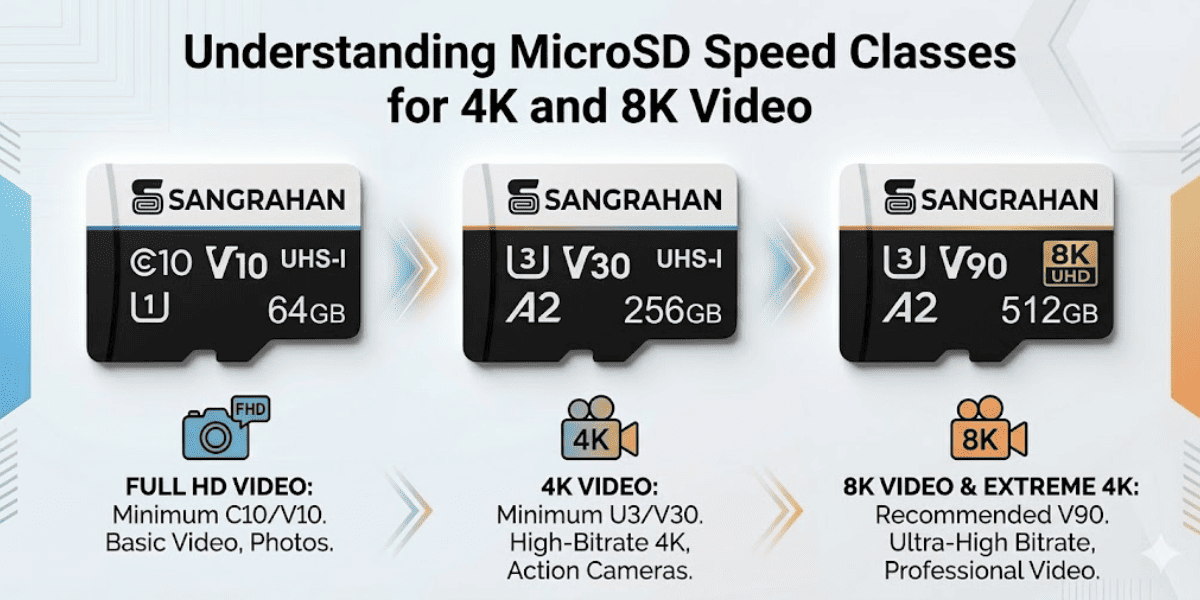
Intro to the Speed Symbols
If you’ve ever looked closely at a microSD card, you’ve likely noticed a crowded label filled with tiny letters and numbers. It’s a common misconception that capacity is the only metric that matters. You might have two 256GB cards side-by-side, but one is a budget-friendly option for a basic smartphone, while the other is a powerhouse designed for a professional cinema drone.
When it comes to high-resolution videography, not all cards are created equal. Even if they can hold the same amount of footage, their ability to record that footage in real-time varies drastically. Choosing the wrong speed class can lead to dropped frames, corrupted files, or a camera that simply refuses to record.
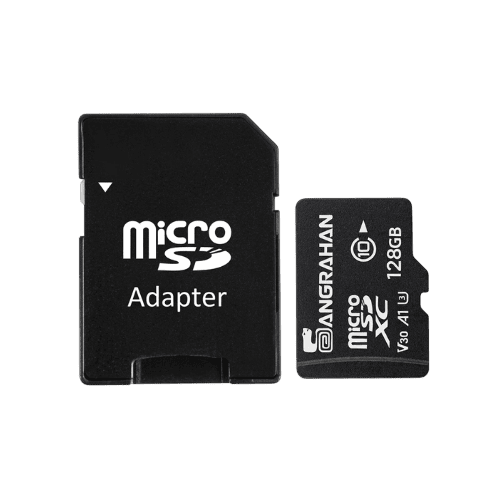
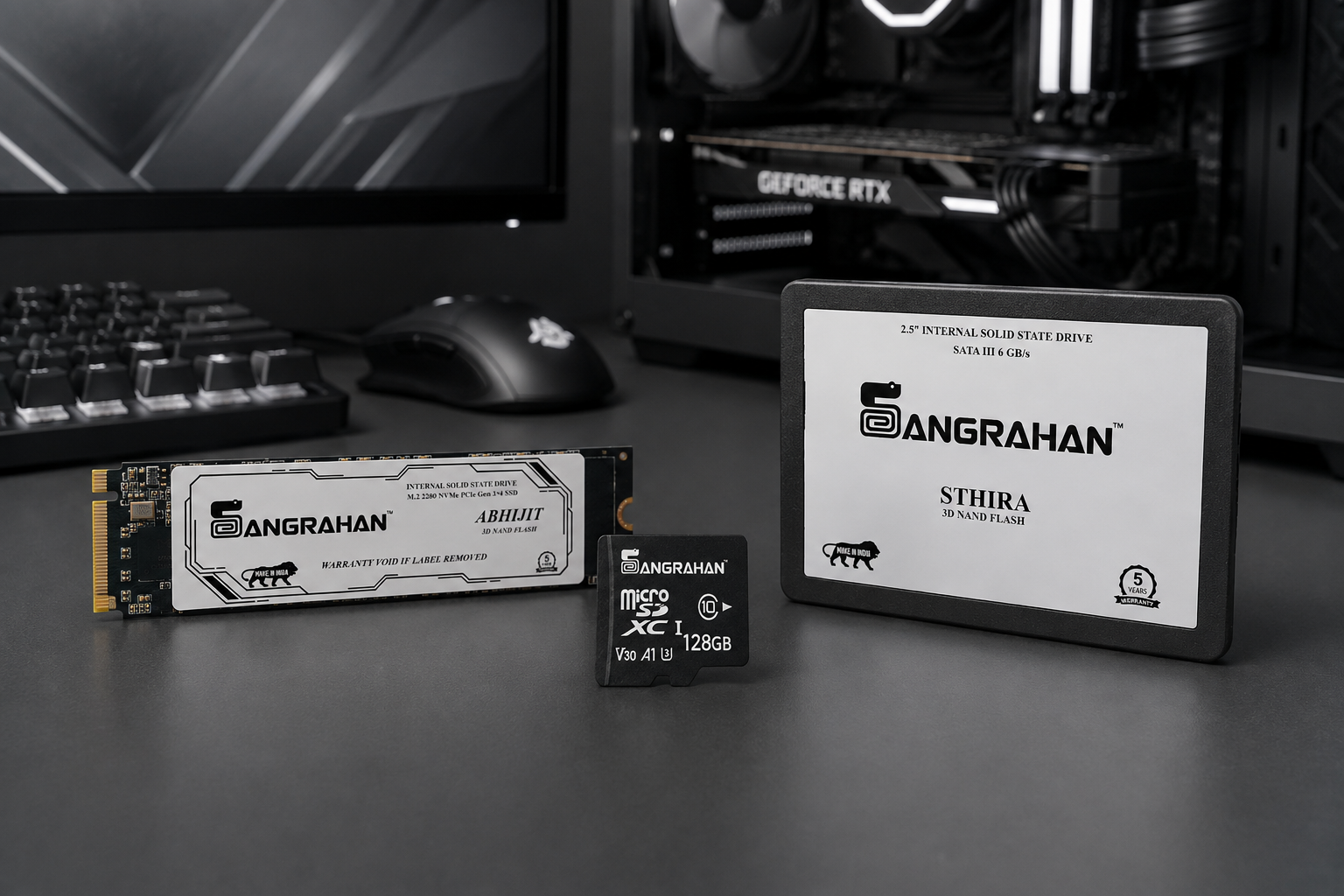
On our Anu Series cards, we provide the essential visual symbols you need to verify performance at a glance. Here is what those "hieroglyphics" actually mean for your workflow:
V30 (Video Speed Class): This is the most modern and critical rating for videographers. A V30 rating guarantees a minimum sustained write speed of 30MB/s. This is the "gold standard" for 4K video, ensuring the card can keep up with the heavy data stream without a hiccup.
U3 (UHS Speed Class): Represented by a '3' inside a 'U' bucket, this also signifies a minimum sustained write speed of 30MB/s. While it overlaps with V30, seeing both on an Anu Series card ensures compatibility across older and newer hardware standards.
Class 10 (Legacy Speed Class): Indicated by a '10' inside a 'C', this was once the peak of SD card performance. It guarantees a minimum write speed of 10MB/s. While it’s perfect for Full HD (1080p) recording, on a modern high-performance card, this symbol serves as a baseline to ensure the card works reliably in older legacy devices.
By integrating all three standards into the Anu Series, we ensure that whether you are shooting high-bitrate 4K on a mirrorless camera or just expanding your tablet's storage, the card is optimized for the task.
Why Write Speed Matters for High-Res Video
When you are shooting in 4K at 60fps or pushing the boundaries with 8K resolution, your camera is processing an incredible amount of data every second. Unlike taking a still photo—where the camera can take a moment to "buffer" and write to the card—video recording is a relentless, real-time stream.
To capture these high resolutions, your microSD card must maintain a constant minimum write speed. If the card’s write speed fluctuates or drops below the bitrate required by the camera, the data "pile-up" leads to critical failures.
The Risks of Using Low-Speed Cards
Using a card that isn’t rated for high-speed data handling isn't just a minor inconvenience; it can ruin a professional shoot. In high-demand devices like drones, action cameras, and mirrorless rigs, a slow card usually results in two major issues:
- Dropped Frames: When the card can’t keep up, the camera is forced to skip frames to keep the recording going. The result is "choppy" or "stuttering" footage that is unusable for professional editing.
- Data Corruption: This is the worst-case scenario. If the write process is interrupted because the card "hangs" or overheats while trying to manage the data flow, the entire file header can be corrupted. You might finish a 20-minute flight with your drone only to find a "File Error" message when you try to playback the footage.
For 8K recording specifically, the data density is four times that of 4K. This is where the Anu Series thrives; by guaranteeing a sustained write speed, we eliminate the bottleneck between your camera's sensor and your final storage, ensuring every frame is captured with precision.
Breaking Down the Standards
To choose the right card for your gear, you need to understand the three primary scaling systems used in the industry. Each standard represents a different facet of performance, from sustained video streams to the rapid-fire "burst" speeds required by modern apps.
V30 & V60: The Video Speed Classes
The Video Speed Class (represented by the 'V' symbol) was created specifically to address the demands of high-bitrate cinema cameras.
- V30: Guaranteed minimum write speed of 30MB/s. This is the standard requirement for most 4K drone footage and high-quality mirrorless video.
- V60: Guaranteed minimum write speed of 60MB/s. As we move toward 8K or 4K "All-Intra" recording—where every single frame is captured in full detail—the V60 standard becomes essential to prevent the buffer from filling up.
U3 & U1: Ultra High Speed (UHS)
The UHS Speed Class is often found alongside the 'V' ratings and defines the card's ability to handle data "bursts."
- U3: Found on all high-performance Anu Series cards, this supports 30MB/s minimum write speeds. It is the baseline for reliable 4K video.
- U1: Supports 10MB/s. While fine for standard HD video, it is more suited for high-resolution photography where you aren't shooting rapid-fire bursts.
A1 & A2: The Application Performance Class
If you plan to use your microSD card in a smartphone or tablet to expand internal storage, look for the 'A' rating. Unlike video recording, apps perform "Random I/O"—tiny, rapid reads and writes from various locations on the card.
- A1: Offers a baseline level of performance that allows apps to run directly from the card without significant lag.
- A2: A massive jump in performance. A2-rated cards use Command Queuing and Cache functions to handle thousands of operations per second (IOPS). This is critical for gaming or heavy multitasking on Android devices.
Why the Anu Series is the Professional Choice
At Sangrahan, we don’t just design storage; we design reliability. The Anu Series microSD cards are engineered to bridge the gap between consumer-grade storage and industrial-strength performance, making them the definitive choice for professionals in India and beyond.
Built for Sustained Performance
While many cards boast high "peak" speeds, they often throttle or slow down during long recording sessions as they heat up. The Anu Series is optimized for consistent write speeds. Whether you are filming a 30-minute 4K interview or a cross-country drone flight, our cards maintain the sustained throughput required to ensure you never see a "Recording Limit Reached" error due to hardware bottlenecks.
Engineered for the Elements
Professional work often takes you out of the studio and into unpredictable environments. We have built the Anu Series to be as rugged as the gear you use:
- Temperature Resilience: From the intense summer heat of Mumbai to high-altitude cold, our cards are tested to operate in extreme temperature ranges.
- High Endurance: Our flash memory architecture is designed for high-cycle recording. This makes it ideal not just for cinematography, but also for dashcams and security systems that require constant, 24/7 data overwriting.
- Multi-Proof Protection: The Anu Series is resistant to water, X-rays (essential for airport security), and magnetic interference.
When your data represents hours of hard work, you need a card that acts as a fortress for your files. The Anu Series provides that peace of mind, combining Proudly Made in India pride with world-class technical standards.