The Two Paths to a Faster Computer
We’ve all experienced the frustration of a once-powerful laptop or desktop slowing to a crawl. Whether it’s taking minutes to boot up, lagging while opening simple documents, or "hanging" during intensive multitasking, a sluggish system is often not a processor problem—it’s a storage bottleneck.
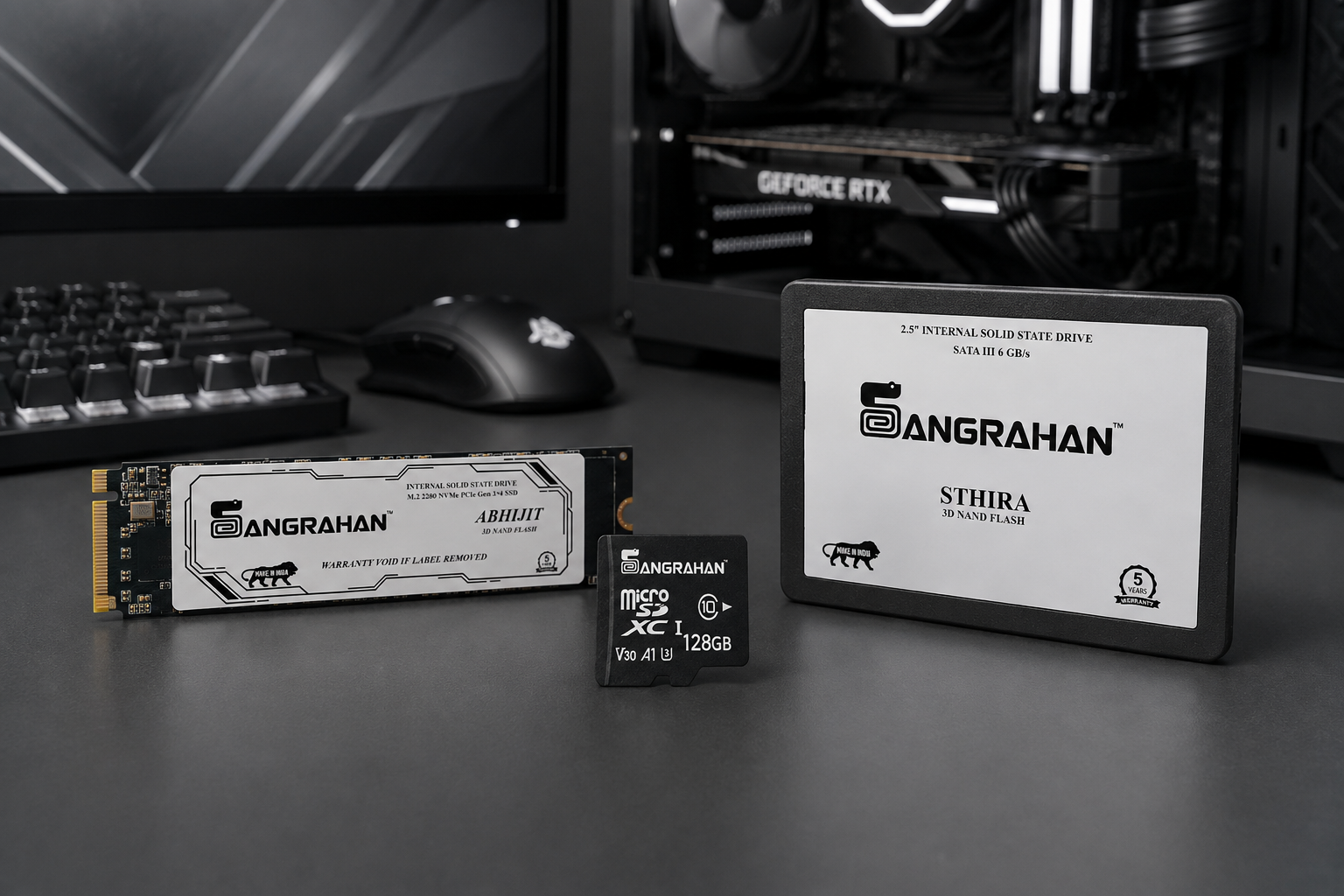
When it comes to breathing new life into your machine, upgrading to a Solid State Drive (SSD) is the single most effective move you can make. However, once you start browsing the Sangrahan catalog, you’ll notice two distinct paths: SATA and NVMe.
The right choice for your upgrade isn't just about which one is "faster" on paper; it depends on two critical factors:
- Hardware Compatibility: What physical slot does your motherboard actually have?
- Workflow & Budget: Are you looking for a cost-effective boost for everyday tasks, or do you need professional-grade speed for heavy data processing?
Understanding these two standards is the key to ensuring you don't buy a high-end drive that your laptop can't support—or conversely, settling for a slower drive when your hardware is capable of so much more. In this guide, we’ll break down the technical differences so you can make an informed decision for your next upgrade.
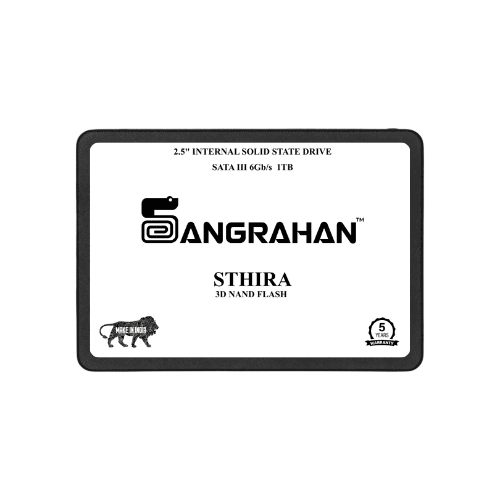
Understanding SATA III and the Sthira Series
For many users, the most accessible entry point into the world of SSDs is the SATA III standard. This is the "legacy" powerhouse that transformed the way we think about storage. At Sangrahan, our Sthira Series is designed specifically to fulfill this role, offering a perfect balance of reliability and affordability.
The 2.5-Inch Form Factor
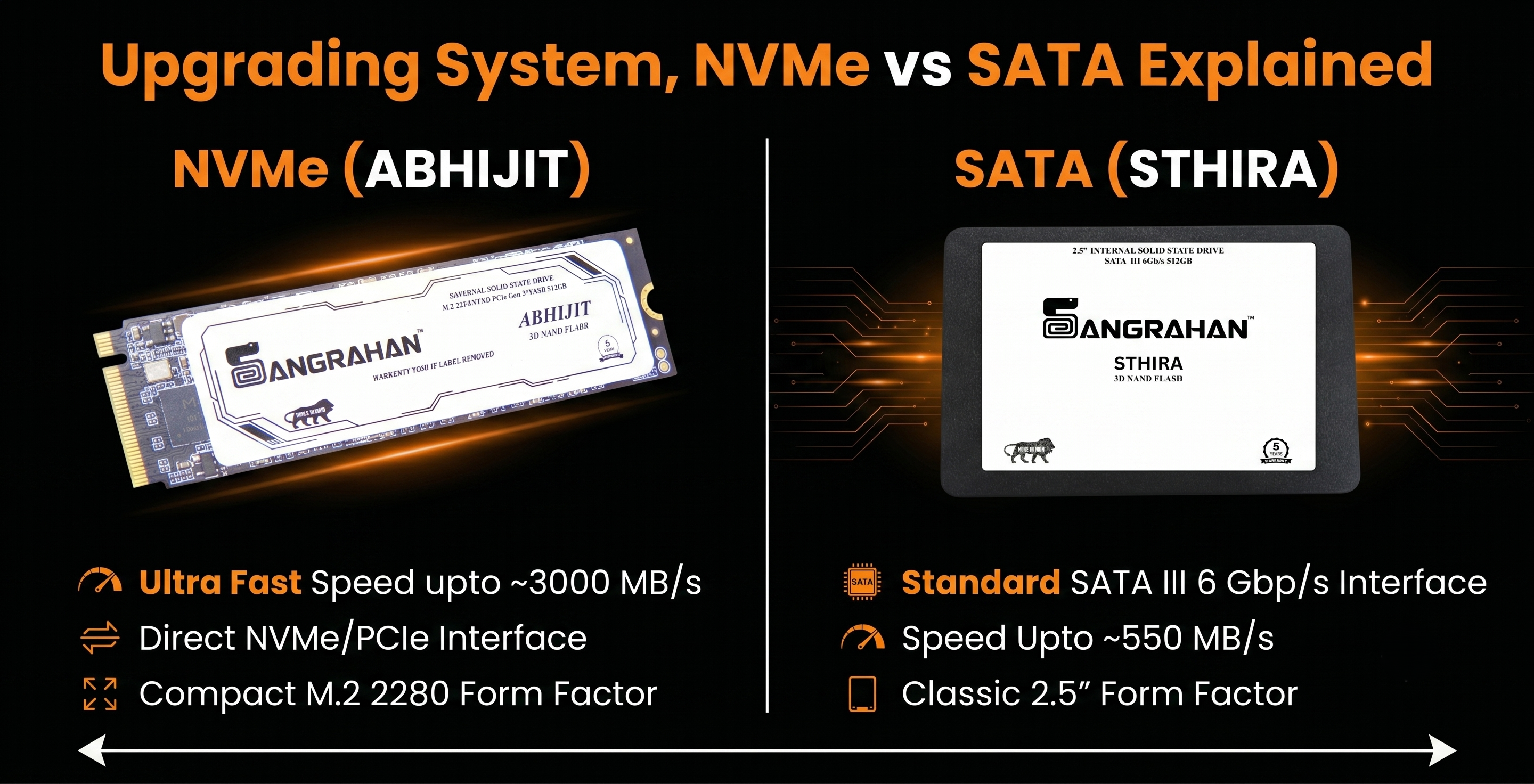
The most recognizable feature of a SATA SSD is its physical shape. It uses the 2.5-inch form factor, which is identical in size and shape to the traditional mechanical hard drives (HDDs) found in older laptops and desktops. This makes the Sthira Series a "drop-in" replacement—you simply unplug the old, noisy hard drive and slide in the silent, fast SSD using the same cables and mounting brackets.
A Massive Performance Leap
Even though SATA is considered an older standard, the jump in performance from a mechanical drive is staggering. While a traditional HDD relies on spinning platters and a moving physical arm (which limits speeds to around 100–150MB/s), a SATA SSD has no moving parts.
- Up to 5x Faster: A Sthira Series SATA SSD can reach speeds of up to 550MB/s.
- Instant Response: You will notice near-instant boot times, apps that launch in seconds rather than minutes, and a much more "snappy" feel to your entire operating system.
Best For: Legacy Hardware and High Capacity
The SATA interface is the best choice if you fall into one of two categories:
- Reviving Older Machines: If your laptop is 4–7 years old, it likely only has a SATA bay. Installing a Sthira SSD is the single best way to make an old computer feel like new again.
- Massive Storage at a Lower Price: If you need 1TB or 2TB of storage to hold photos, movies, and archives, SATA offers a much better price-per-gigabyte than NVMe.
It’s the smart choice for bulk storage where you need speed, but don't need the extreme "overkill" speeds of professional NVMe drives.
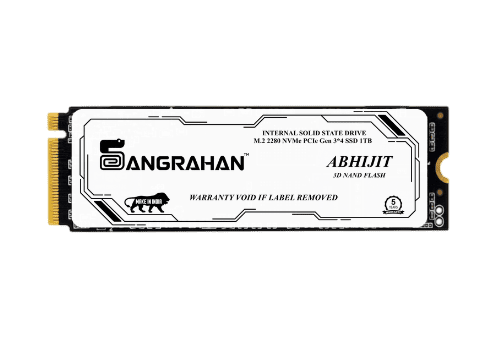
Understanding NVMe and the Abhijit Series
While SATA was built on technology designed for spinning disks, NVMe (Non-Volatile Memory Express) was engineered from the ground up for high-speed flash memory. At Sangrahan, our Abhijit Series represents this cutting-edge standard, designed for those who refuse to wait for their data.
The M.2 Form Factor and PCIe Gen3
The first thing you’ll notice about an Abhijit Series NVMe drive is its size. Instead of a bulky 2.5-inch box, it uses the M.2 form factor—a slim, gum-stick-shaped card that plugs directly into the motherboard.
More importantly, it uses the PCIe Gen3 protocol. Think of SATA as a narrow single-lane road; PCIe is a multi-lane superhighway. NVMe talks directly to your computer's CPU, eliminating the "middleman" and drastically reducing latency (the time it takes for your computer to find a file).
A Massive Speed Jump
The performance difference between SATA and NVMe isn't just incremental; it’s a total transformation:
- Up to 3,000MB/s: While SATA is capped at around 550MB/s, our Abhijit Series NVMe drives can reach read speeds of up to 3,000MB/s.
- 6x Faster than SATA: This means moving large files, loading massive game levels, or rendering high-resolution video happens in a fraction of the time.
Best For: Modern Rigs and Power Users
If your hardware supports an M.2 slot, the Abhijit Series is the gold standard for:
- Modern Ultrabooks: Because they are so thin and light, almost all laptops released in the last 3-4 years rely exclusively on M.2 NVMe drives.
- Gaming Rigs: Modern games are massive. NVMe ensures that textures load instantly and "loading screens" become a thing of the past.
- Creative Workstations: For video editors, 3D artists, and photographers working with high-res RAW files, the high bandwidth is essential for a fluid workflow.
How to Choose the Right Upgrade for Your Build
Navigating the technical specs of your laptop or desktop can feel overwhelming, but choosing between the Sthira (SATA) and Abhijit (NVMe) series usually comes down to three simple checks. Before you make your purchase on Sangrahan.in, use this checklist to ensure 100% compatibility.
Your Compatibility Checklist
| Feature | Sthira Series (SATA) | Abhijit Series (NVMe) |
|---|---|---|
| Device Age | 2015 or earlier | 2019 or later |
| Physical Slot | 2.5-inch SATA Bay | M.2 PCIe Slot |
| Best For | Office work & Bulk storage | Gaming & Creative Work |
Why Sangrahan is the Reliable Choice for Both Paths
At Sangrahan, we believe that high-quality hardware should be accessible and dependable. Whether you are reviving a legacy machine or building a next-gen workstation, we provide:
- Verified Reliability: Both our Sthira and Abhijit series undergo rigorous stress testing to ensure they handle the heat and humidity of the Indian climate without performance drops.
- Precision Engineering: We focus on consistent write speeds, so your drive doesn't slow down as it fills up—a common issue with budget "no-name" brands.
- Proudly Made in India: By choosing Sangrahan, you are supporting local innovation and receiving a product designed specifically for the needs of Indian professionals and students.